How RFID Technology is Revolutionizing Everyday Tasks
RFID technology (Radio-Frequency Identification) is transforming the way we perform daily tasks by enabling seamless communication between tagged objects and readers. This innovative technology uses radio waves to automatically identify and track tags attached to objects, which can significantly enhance efficiency. For instance, in retail environments, RFID tags allow for real-time inventory management, helping businesses to keep track of stock levels, reduce theft, and improve customer service. By eliminating manual counting processes, RFID technology significantly speeds up inventory checks and minimizes human error.
Another notable application of RFID technology can be found in personal item tracking. Imagine never losing your keys or wallet again! With the advent of RFID-enabled tags, users can easily organize and locate their belongings through connected smartphone apps. Additionally, in healthcare settings, RFID technology is making a remarkable impact by enabling better patient tracking and medication management. By incorporating RFID tags into patient wristbands and medicine packaging, healthcare providers can ensure the right patient receives the right treatment, thereby improving safety and compliance.
Counter-Strike is a highly popular first-person shooter game that pits teams of terrorists against counter-terrorists in a variety of objective-based missions. Players can experience intense gameplay that emphasizes teamwork and strategy. For those looking for the latest gadgets and accessories, check out the Top 10 magsafe wallets for a stylish way to carry essentials while gaming.
The Hidden Benefits of RFID: Efficiency, Security, and Beyond
The implementation of RFID (Radio Frequency Identification) technology offers a range of hidden benefits that go beyond mere inventory management. Businesses leveraging RFID can experience significant boosts in efficiency, as this technology automates tracking processes that were once manual and time-consuming. For instance, RFID tags can streamline supply chain operations by enabling real-time monitoring and improving order accuracy. This not only reduces human error but also increases operational speed. Furthermore, the seamless integration of RFID with existing systems helps in achieving a synchronized workflow, leading to enhanced productivity across various departments.
In addition to promoting efficiency, RFID also plays a critical role in enhancing security. By providing unique identification for assets and products, RFID technology helps prevent theft and unauthorized access. Businesses can implement advanced tracking systems that alert them to anomalies, such as missing items or irregular movements within their facilities. These alerts empower organizations to respond promptly, thereby minimizing losses and ensuring that inventory levels remain optimized. Additionally, with the growing demand for transparency in supply chains, RFID's ability to accurately trace the origin and journey of products further strengthens consumer trust and brand integrity.
What is RFID? Understanding the Technology That Supports Your Daily Life
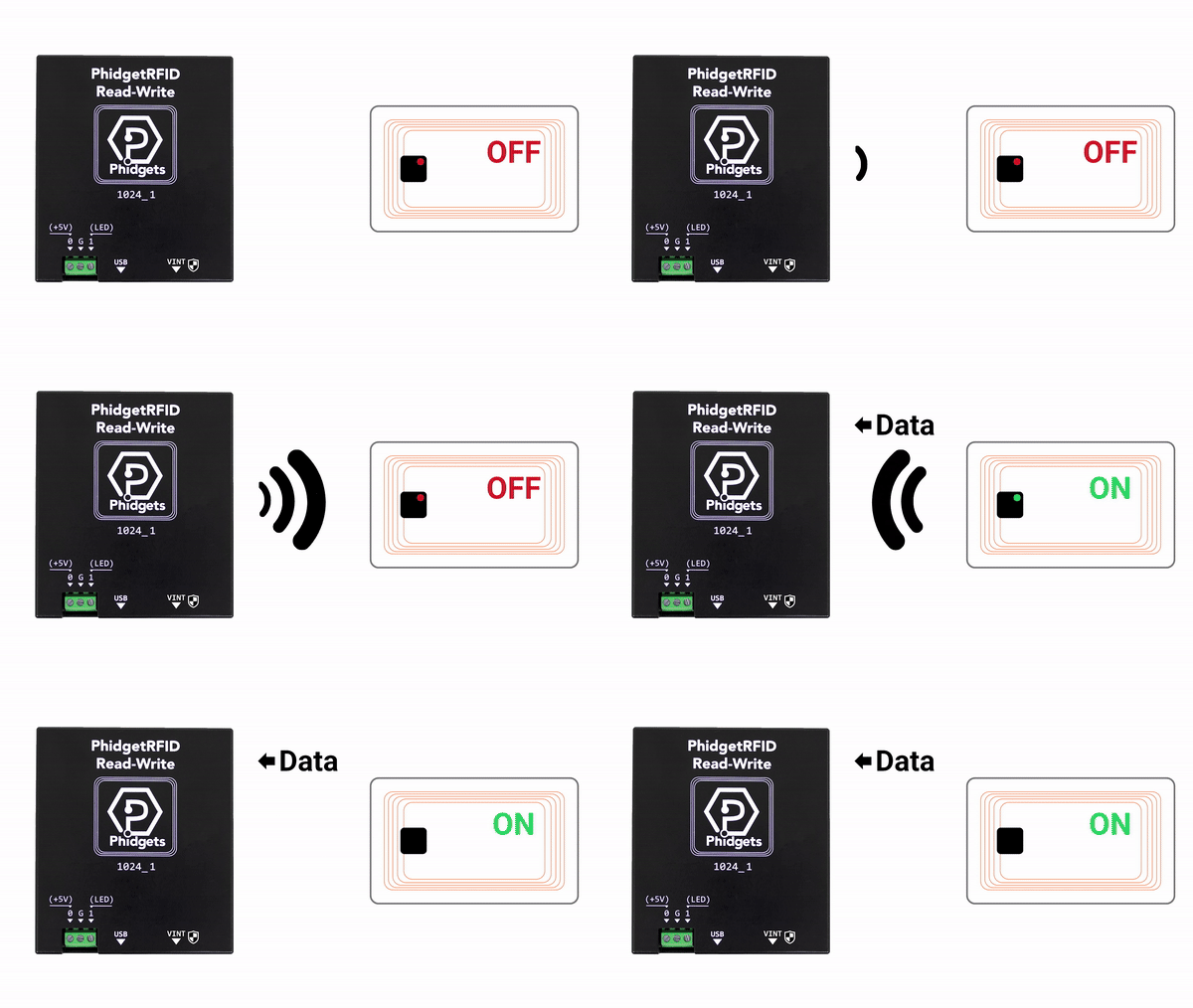
RFID, or Radio Frequency Identification, is a technology that uses electromagnetic fields to automatically identify and track tags attached to objects. These tags contain electronically stored information and can be read from a distance without needing direct line-of-sight, making them a versatile solution for a variety of applications. From the inventory management in large warehouses to the easy access controls in your daily commutes, RFID has become a part of our everyday lives, often without us even realizing it. The technology consists primarily of two components: the tag and the reader. The tag contains a microchip with stored information and an antenna, while the reader emits radio waves that activate the tag, retrieving the data contained within.
The uses of RFID are vast and are continually growing as the technology improves. For example, in retail, RFID tags help businesses keep track of inventory more efficiently, reducing losses and improving customer satisfaction by ensuring products are always in stock. In the healthcare sector, RFID can be used to streamline patient care by tracking medical equipment and ensuring medications are administered correctly. As more sectors adopt this innovative technology, it is clear that RFID is not just a passing trend but a fundamental technology that shapes the way we interact with the world around us.